













Communicating without words

By Stephanie Lee Slew
Senior Speech Pathologist
Communication is so much more than just using words. While children start to use their first words around 12 months of age, there is lots of communication occurring well before their first birthday! Before children start to use words to communicate, they will use different behaviours, called interaction skills, to get their messages across.
What are interaction skills?
Interaction skills are the foundation of two-way communication. Being able to start and respond in an interaction, makes for successful communicators. Interaction skills can include all the ways we communicate without using words, such as:
- Gestures (waving or shrugging shoulders),
- Facial expressions (smiling, eyes widening),
- Imitation (copying),
- Joint attention (child and adult focusing on an object at the same time),
- Pointing
- Eye contact
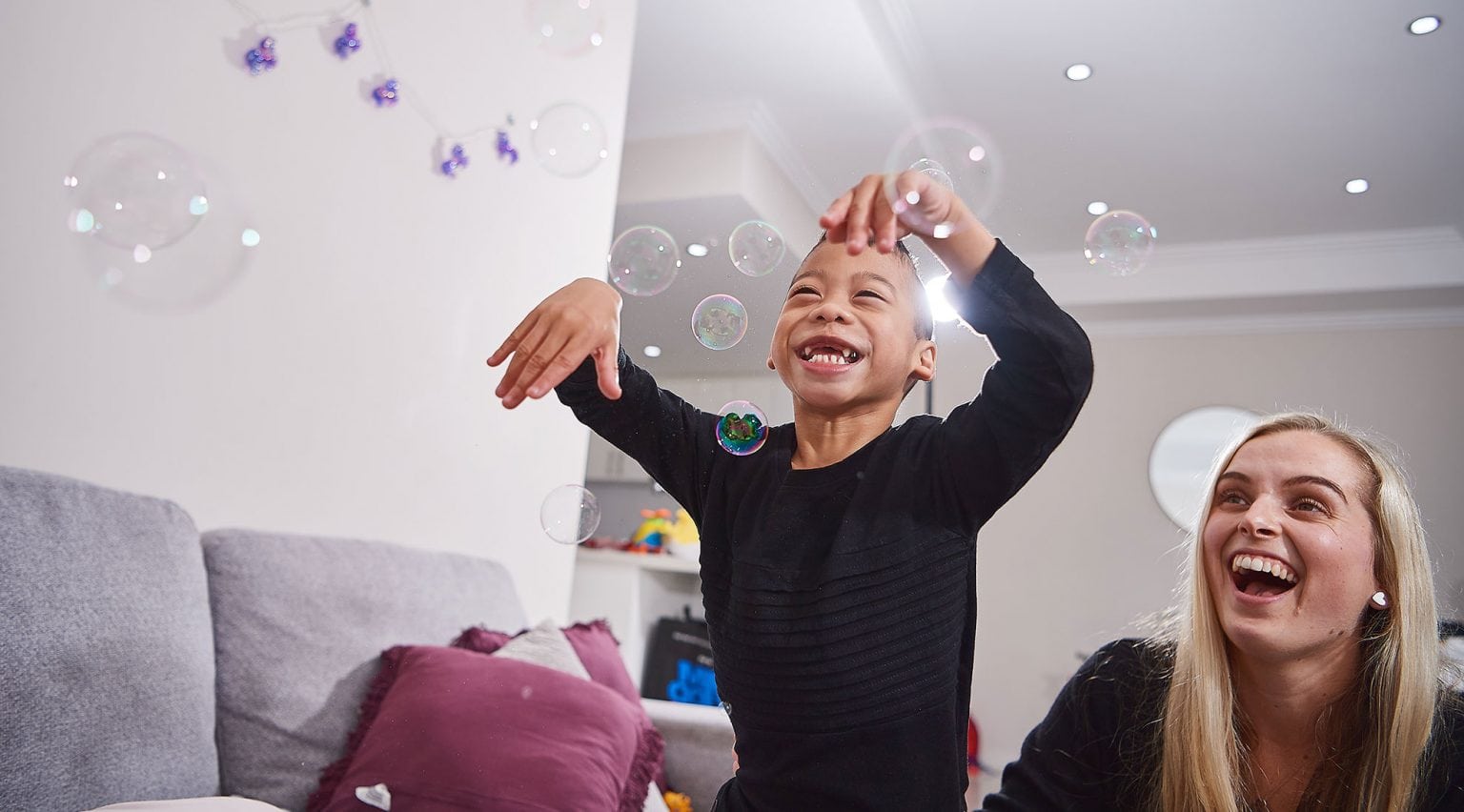
From the minute they are born, children start using these pre-language skills to communicate their needs and wants. For example, they might smile when they are happy, or point for an adult to ask them something.
However, no matter how skilled they are at using these skills, they do not realise that by using sounds, facial expressions and gestures they are communicating messages until they see their parent or support network respond to these messages consistently. When this happens children start to use their interaction skills with a purpose to engage and communicate.
When both a child and an adult responds to these behaviours by either using words or interaction skills, it signifies the start of an early conversation! These early back and forth interactions or conversations are essential for a child’s future language and social development.
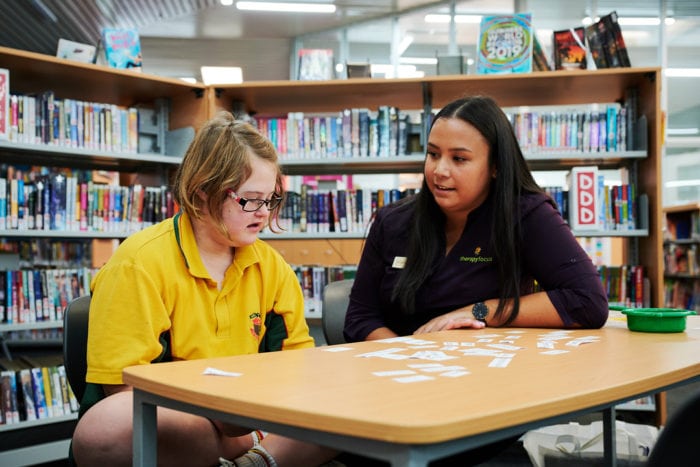
What skills can be learned through early conversation?
- Being able to start interactions or conversations with another person
- Understanding how to respond when someone starts an interaction with them
- Understanding how to take turns in a conversation
- Understanding when a good time is to have a turn
- Being able to share turns in a conversation.
- Developing the skills to pay attention to their conversation partner
- Being able to continue a conversation by asking questions and making comments
- Being able to stay on the topic of conversation and introducing new topics clearly
- Understanding how to send clear messages
- Being able to solve misunderstandings by repeating what was communicated or communicating in a different way
How can we support children to develop their interaction skills?
- Ensure the interaction is exciting and fun.
- Respond to your child’s communication attempts with interest and excitement
- Keep the conversation going by extending turns and providing opportunities for you and your child to have turns.
How can a speech pathologist help?
If your child is experiencing communication challenges, our qualified speech pathologists help devise strategies and tactics to improve communication capabilities. Speak with one of our experienced speech pathologists by calling 1300 135 373.
Our Speech Pathology services
Our speech pathologists provide support to people who have difficulty communicating and swallowing.
By Stephanie Lee Slew
Senior Speech Pathologist
Last Updated 21 Aug 2024